

Agents, versions and runs
An agent is a text, not a program
Section titled “An agent is a text, not a program”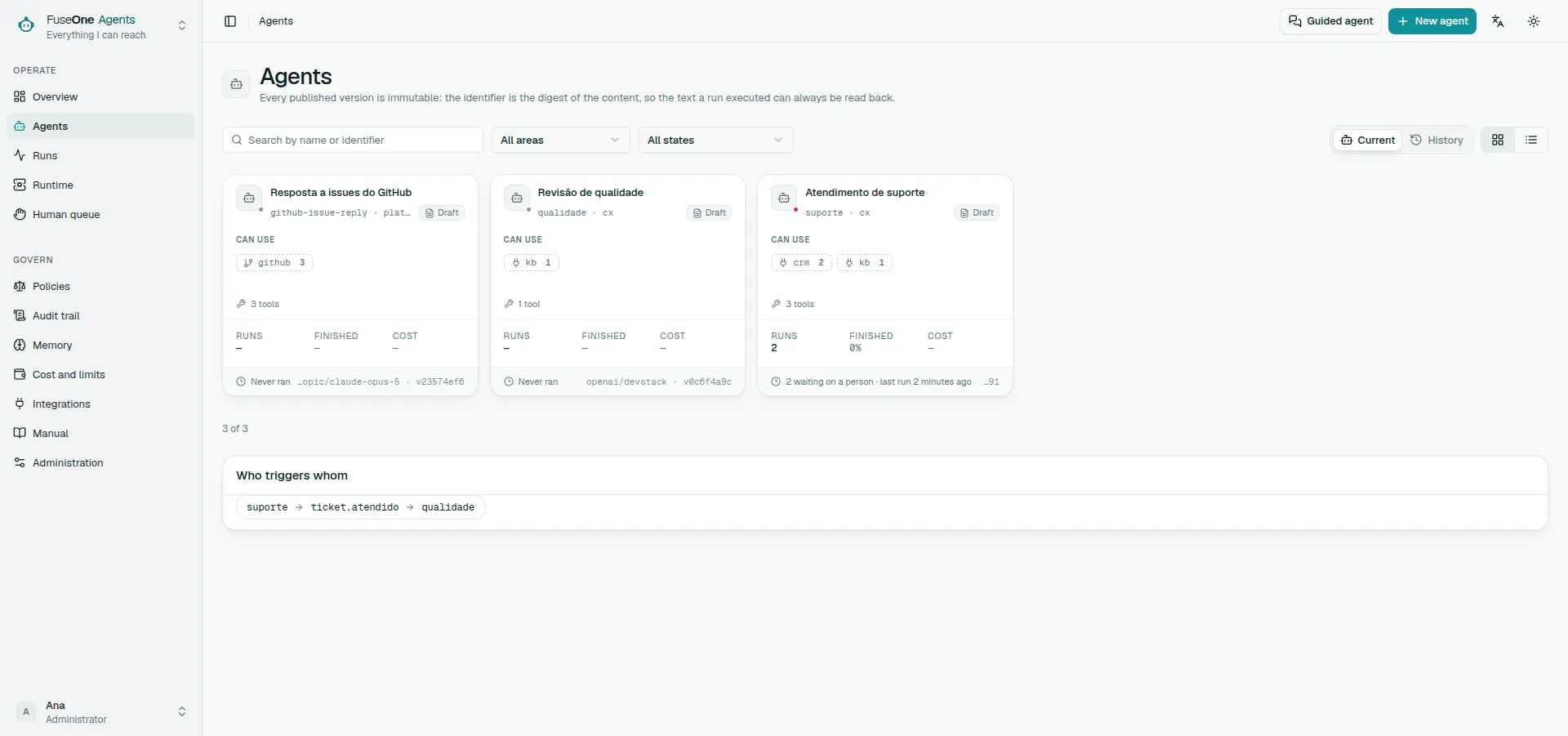
An agent is written in plain language, in blocks: the objective, what it may use, what it never does. There is no code inside it and no drag-and-drop canvas. What is written is what the platform reads.
That is a choice, and it has a consequence you feel daily: the person who writes the agent is the person who understands the process, not the person who understands programming.
A version is a freeze
Section titled “A version is a freeze”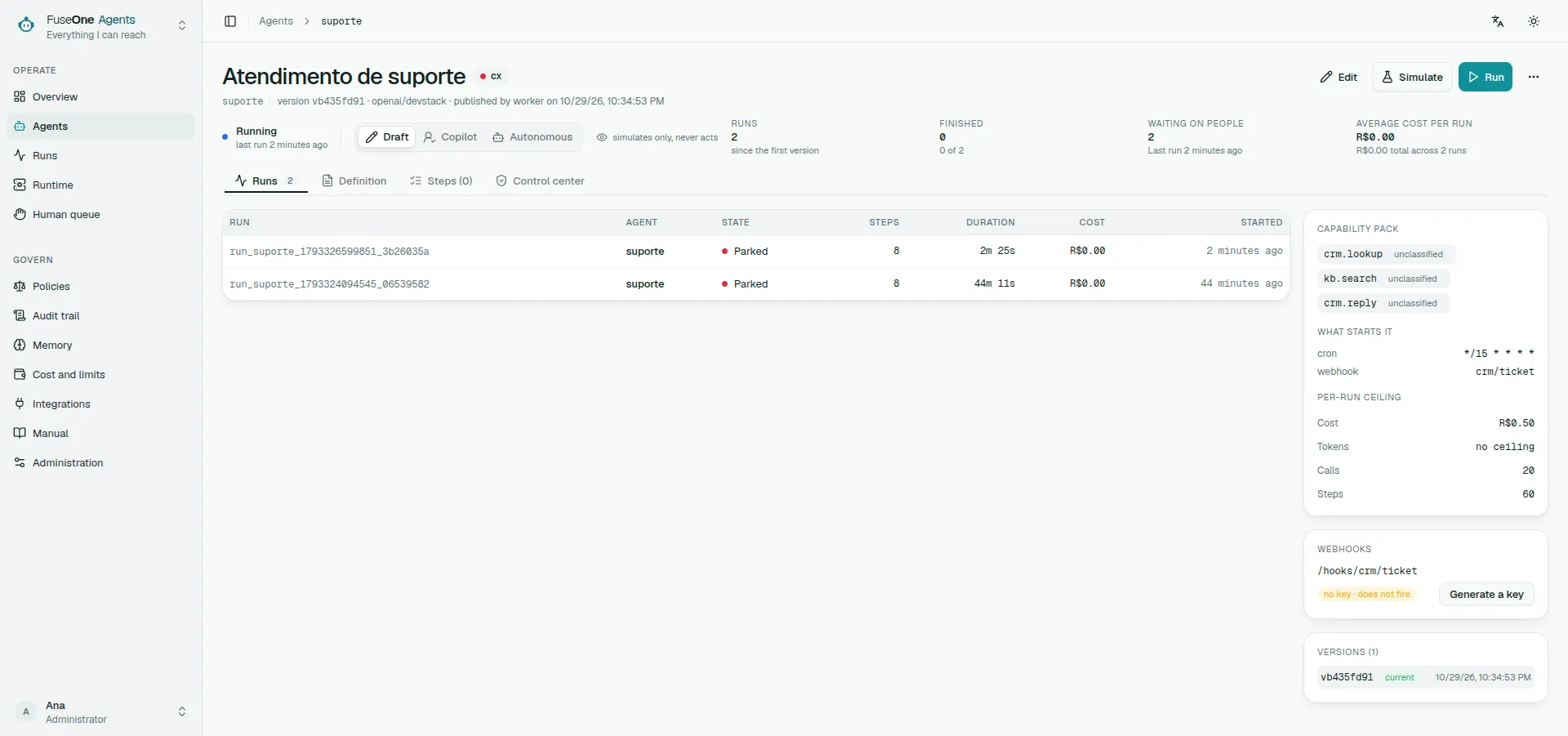
Every time an instruction is published, the platform stores the whole text and derives a version from it. Publishing the same text twice does not create two versions — the version is the content.
This answers the question that arrives months later: which instructions did that run under? Not today’s. That day’s, which are still stored.
A run is pinned to the version it opened on
Section titled “A run is pinned to the version it opened on”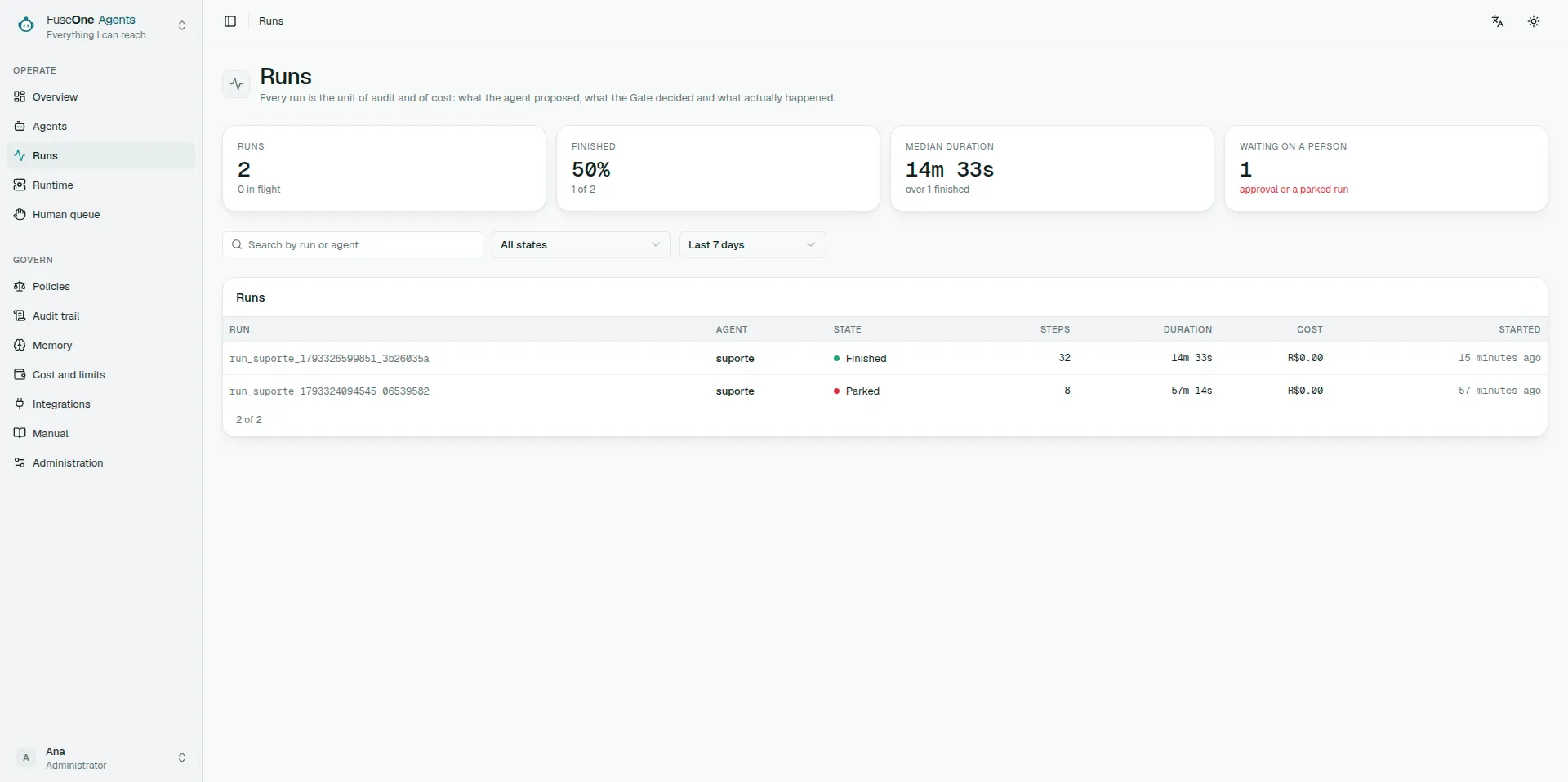
A run carries the version that was current when it opened, and keeps it until it ends. Publishing a correction mid-afternoon does not change what is already running.
That rules out the case where somebody approves an action, the instruction changes, and a different action executes. What was approved and what ran are the same thing, always.
Everything is read from one record
Section titled “Everything is read from one record”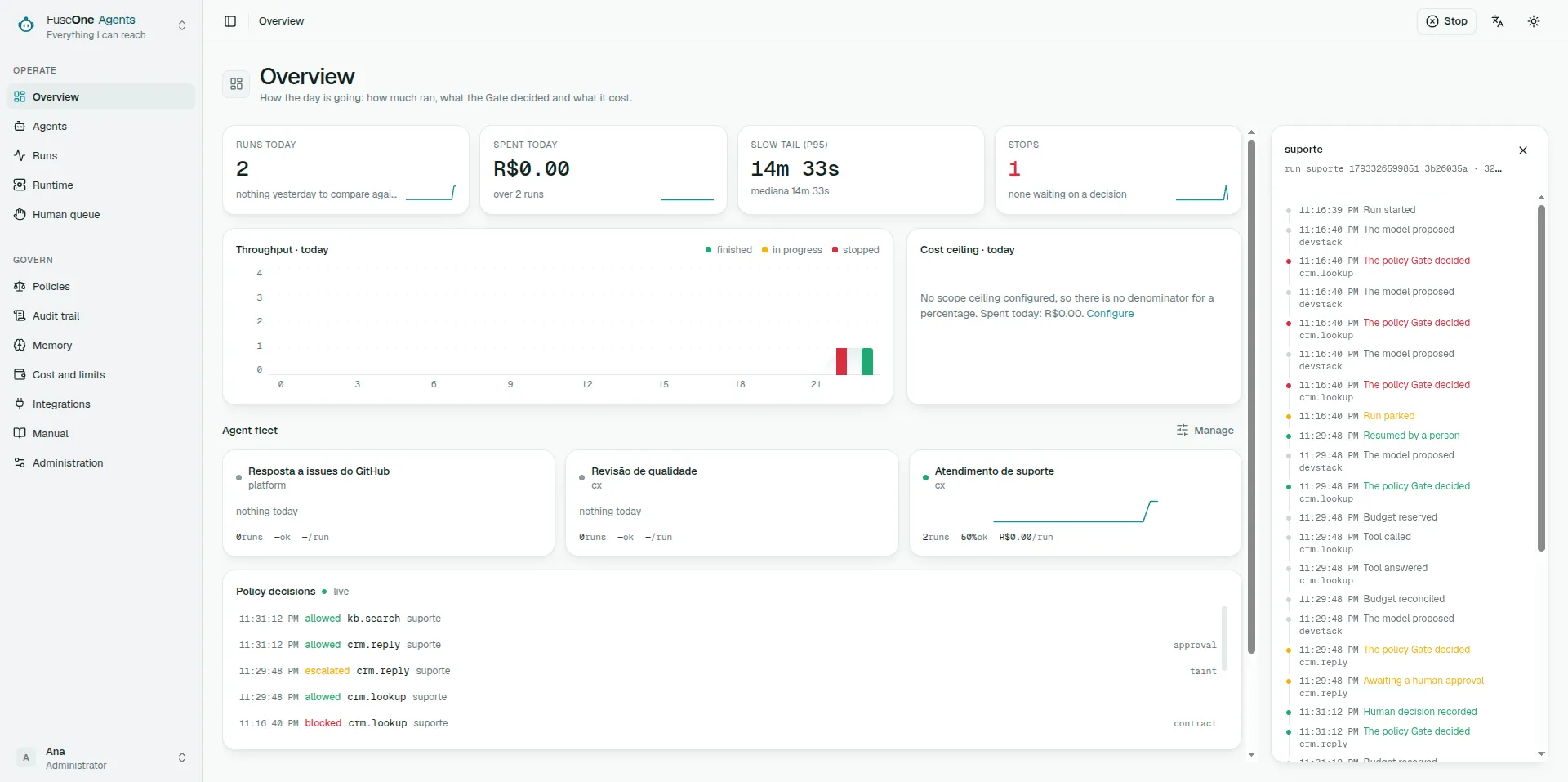
The platform stores no “agent state” anywhere. It stores steps, in order, each sealed against the one before it. State is what you get by reading the steps from the beginning.
In practice: no screen shows a summary somebody could have updated on the side. What the screen shows and what an auditor reads come from the same reading.
A recorded step is never altered or deleted — the database refuses. A correction is a new step, and the correction is on the record too.
What stops a run from doing something is covered in What the platform stops before it happens.